
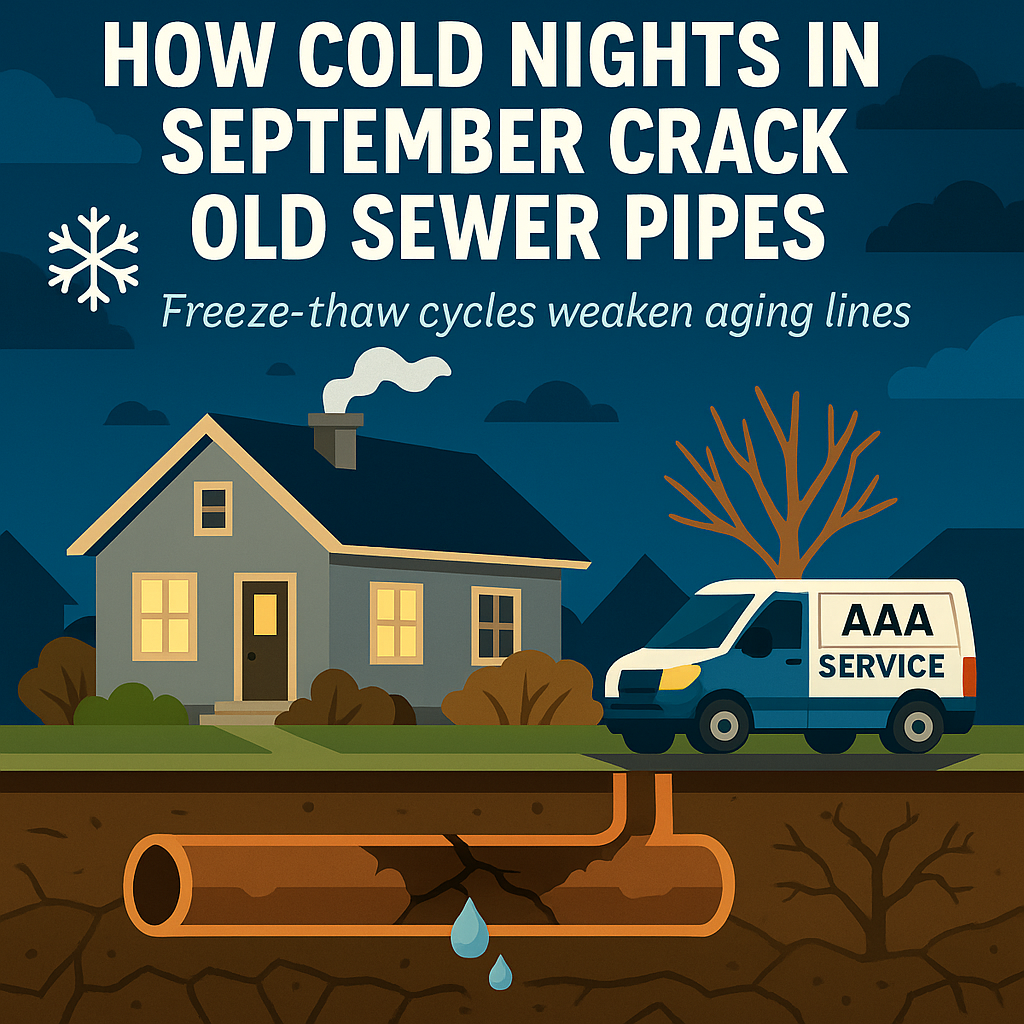
Fort Wayne homeowners often associate pipe cracks and bursts with the dead of winter. But the truth is, the earliest damage usually begins much sooner — often in September, when cold nights first start making their mark. Those seemingly mild 40°F evenings can quietly trigger a destructive cycle beneath your home, especially if your sewer pipes are already aging or made of vulnerable materials like clay, cast iron, or Orangeburg.
In this expanded guide, we uncover how early autumn temperature shifts begin to compromise your sewer system, what warning signs to watch for, and how AAA Sewer Service in Fort Wayne helps homeowners prevent costly seasonal disasters before they strike.
1. The Freeze-Thaw Microcycle Begins in Fall
While it may not be cold enough to freeze a puddle, temperature swings between chilly nights and warm afternoons cause the soil to subtly expand and contract around buried pipes. This cycle stresses old sewer lines, especially in:
- Clay pipes: prone to brittle cracking under movement
- Orangeburg pipes: deteriorate faster when exposed to pressure shifts
- Cast iron pipes: may corrode or fracture along weakened seams
In Fort Wayne, where overnight temps can drop below 45°F by mid-September, these early shifts act as a warning drumbeat before winter fully sets in.
2. Moisture + Movement = Pipe Weakening
Moisture retained in soil from late-summer rains, paired with the movement caused by temperature swings, can accelerate pipe decay in several ways:
- Soil heaving: pushes against pipe joints
- Infiltration: cracks let in roots or silt
- Internal corrosion: from trapped gas and waste backups
Each night of mild cooling contributes microscopic strain. Over weeks, this strain compounds until a pipe wall gives way.
3. Warning Signs Before a Full Crack Appears
Most homeowners don’t notice a problem until it’s too late. But some early autumn signs that your sewer line is under pressure include:
- Gurgling sounds from toilets or drains (especially in the morning)
- Foul odors in the yard or basement
- Sluggish drains, even without a clear clog
- A single toilet flushing oddly or bubbling
- Sudden appearance of soggy lawn patches
If you notice these symptoms in September or October, don’t wait. Early action can mean the difference between a repair and a full pipe replacement.
4. How AAA Sewer Service Protects Against Early Damage
AAA Sewer Service has helped Fort Wayne homeowners navigate seasonal transitions for decades. Our early fall inspections help detect vulnerable lines before real damage occurs. Services include:
- Camera inspections to check for tiny fractures or sags
- Hydro jetting to remove buildup before it causes blockage
- Root detection and control for moisture-attracted invasion
- Trenchless repair planning in case proactive fixes are needed
We focus on prevention, not panic — saving you money and hassle by addressing the silent stress before it becomes an emergency.
5. Don’t Wait Until January to Protect Your Pipes
The cost of ignoring early signs can multiply quickly: – Emergency repairs: $3,000–$10,000 – Water damage restoration: $5,000+ – Landscaping repair after excavation
Calling us now for a fall sewer checkup is one of the smartest seasonal steps you can take as a homeowner in Fort Wayne.
Call AAA Sewer Service at (260) 456-6930 or visit www.aaasewerservice.com to schedule your fall inspection. Your sewer line doesn’t care what month it is — protect it before the first real freeze.