
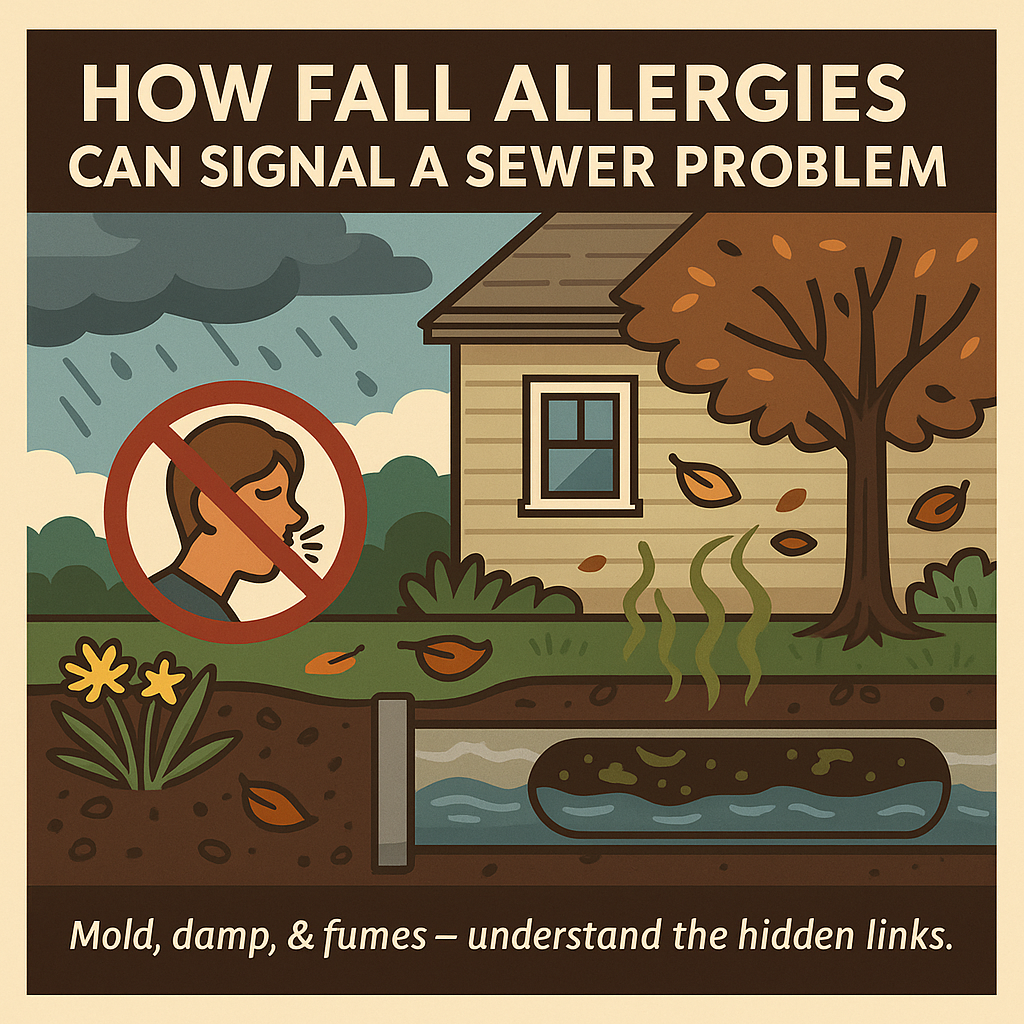
As the crisp air of autumn rolls into Fort Wayne, many homeowners brace for the return of seasonal allergies. Sneezing, itchy eyes, sinus headaches — it’s easy to blame it all on pollen. But what if your fall allergy symptoms aren’t just triggered by nature… but by your own sewer system?
Yes, you read that right. Hidden sewer issues can cause or worsen allergy-like reactions, especially in enclosed indoor environments. In this expanded guide, we’ll explore how mold, moisture, and sewer gas can silently aggravate your health — and how to spot the signs before a minor nuisance becomes a major health hazard.
1. Why Allergy Season Gets Worse Indoors in the Fall
During autumn in Fort Wayne, homes are sealed tighter as temperatures cool. Windows close, heating systems kick on, and fresh air circulation decreases. This creates the perfect environment for indoor pollutants to accumulate — including those originating from your sewer system.
Common household allergy triggers: – Mold spores from damp basements or crawlspaces – Dust mites that thrive in humid ductwork – Sewer gases (like hydrogen sulfide or methane) – Bacteria and mildew from leaking drain lines
All of these can mimic or intensify typical allergy symptoms — especially when combined with true outdoor allergens like ragweed.
2. Mold & Mildew: A Hidden Clue to Sewer Leaks
Basement dampness is often dismissed as “seasonal moisture,” but persistent humidity and mold blooms may signal a sewer backup, cracked lateral, or leaking drain line.
Where to check for signs: – Wall bases behind sinks and toilets – Basement corners near floor drains – Around laundry hookups or utility tubs – Under kitchen sinks (especially older cabinets)
Look for: – Musty odor – Peeling paint or bubbled drywall – Dark or greenish mold patches – Moist, warped wood
AAA Sewer Service offers camera inspections that can locate hidden pipe leaks behind walls and floors before mold spreads too far.
3. Sewer Gas Leaks: The Invisible Allergy Trigger
You may not always smell sewer gas — but it doesn’t mean it’s not there. Even small leaks in vent stacks, toilet seals, or cleanouts can release airborne contaminants into your home.
Common health symptoms include: – Sinus pressure or congestion – Chronic headaches – Fatigue or brain fog – Worsening asthma symptoms
These signs are often misdiagnosed as fall allergies. But they could point to a ventilation problem or failing drain seal.
Check for leaks around: – Toilet bases (rocking or cracked caulk) – Basement floor drains – Laundry sinks with infrequent use
Don’t plug your nose and ignore it — sewer gas is not only irritating, it’s potentially hazardous.
4. Drain Odors & Allergy Spikes: Coincidence or Clue?
If your allergy symptoms worsen in certain rooms — especially bathrooms, laundry areas, or finished basements — it could be related to sewer odors accumulating in stale air zones.
Quick home test: – Run water into all floor drains, especially in unused areas – Re-seal P-traps by pouring in water followed by a tablespoon of vegetable oil – Check that all plumbing fixtures have proper venting
If odors persist, it may indicate a deeper issue like clogged vent stacks, backdrafting gases, or pipe deterioration — all of which AAA Sewer Service can evaluate with non-invasive diagnostics.
5. Fort Wayne’s Fall-Specific Risk Factors
Why is this more common in fall? – Cooler temps = more time indoors, less fresh air – Fallen leaves clog yard drains → water backup → mold – Sump pump inactivity → stagnant water in pits – Condensation in cold crawlspaces
In older Fort Wayne homes with clay or cast iron systems, small sewer breaches are especially prone to hidden leaks during this transitional season.
6. What You Can Do Today
Homeowner checklist: – Inspect drains and basement areas for dampness or odor – Run all infrequent drains (garage, basement, guest bath) – Schedule a sewer camera inspection if symptoms persist – Consider adding a dehumidifier in musty areas
Preventative maintenance helps your health. You wouldn’t ignore mold in your food — don’t ignore it in your walls.
Final Note: Don’t Just Treat the Symptoms — Remove the Cause
If you’re struggling with unexplained allergy symptoms this fall, the answer might not be in your medicine cabinet — it might be beneath your floor.
AAA Sewer Service is here to help Fort Wayne homeowners uncover hidden causes of mold, gas, and moisture buildup before they become emergencies.
📞 Call (260) 456-6930 or visit www.aaasewerservice.com to schedule a fall inspection.
Your sinuses will thank you — and so will your sewer system.