
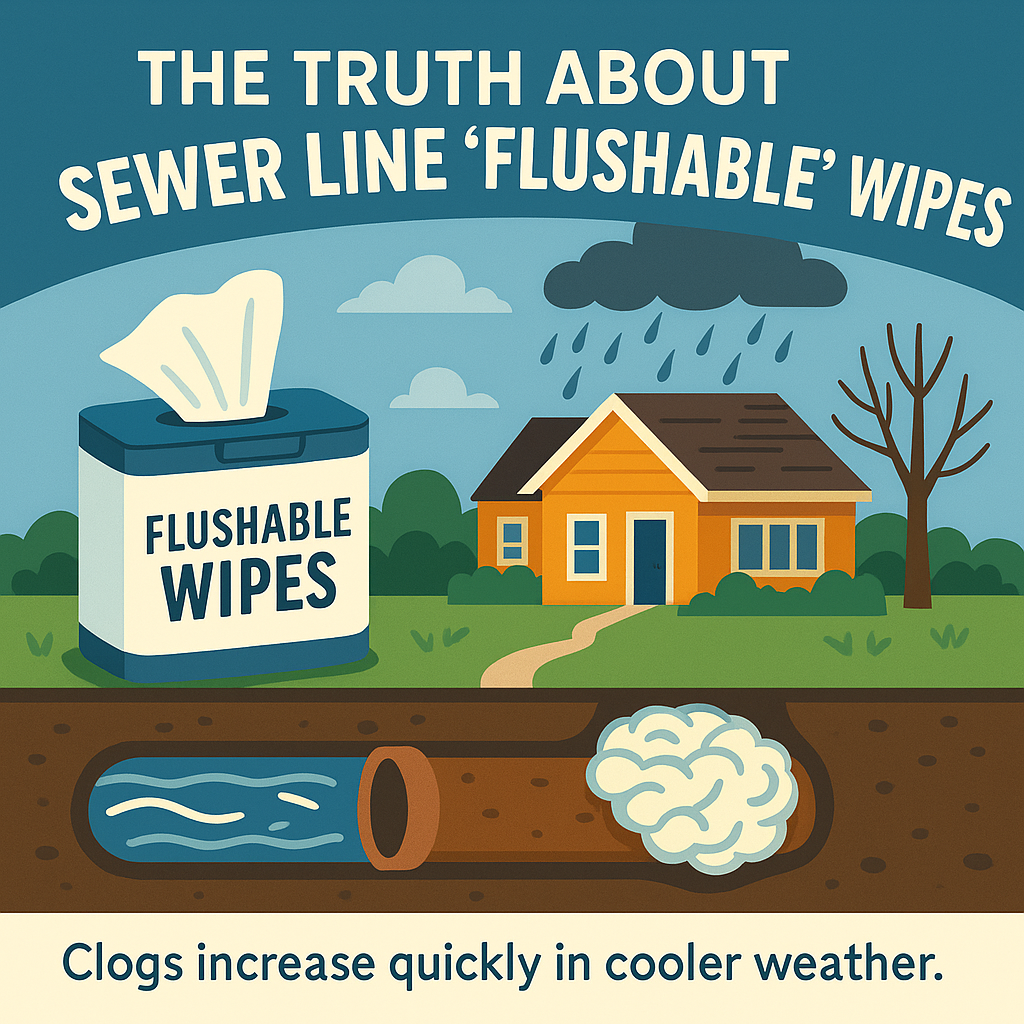
As fall arrives in Fort Wayne, the crisp air, colorful leaves, and cooler temperatures bring more than just a seasonal shift. They also set the stage for one of the most frustrating plumbing myths to resurface: that “flushable” wipes are safe for your sewer system.
Spoiler alert: they’re not.
And when temperatures drop, these so-called convenient hygiene products become even more dangerous to your pipes and municipal systems. Let’s break down why fall weather worsens the damage, what signs to watch for, and how AAA Sewer Service helps Fort Wayne homeowners stay ahead of costly backups.
1. Why ‘Flushable’ Wipes Aren’t Really Flushable
Despite the marketing, most flushable wipes do not break down like toilet paper. In fact, independent tests show they can stay intact for weeks — or longer — after being flushed.
Wipes in your system can: – Catch on pipe joints and sharp turns – Create snags that trap grease, hair, and waste – Combine with cold-weather fat deposits to form sewer “bergs” – Wrap around tree roots or lateral obstructions
Wipes are especially harmful in older Fort Wayne homes with clay or cast iron lines, where surfaces are rough and joints more exposed.
2. Why Fall & Cooler Weather Makes It Worse
You might assume that wipes are a year-round issue — and you’d be right. But autumn introduces two dangerous multipliers:
- Cooling Temperatures = Harder Fats As the weather cools, the fats and grease that make it down drains start to solidify faster and more aggressively. These solids bind with wipes to create dense, concrete-like clogs that block sewer laterals and require hydrojetting or even excavation to remove.
- Yard Drain Use Increases Fall means more outdoor yard waste, like leaves and mulch, which many homeowners wash down driveway grates or exterior drains. If wipes are present in the system, they act as a net, catching debris and worsening clogs.
Bonus Risk: During cooler months, homeowners tend to do less flushing overall, meaning pipes flow slower, giving wipes more time to clump and settle.
3. The Symptoms of a Wipe-Based Sewer Blockage
If wipes are creating issues in your system, you’ll notice:
- Gurgling toilets after flushing
- Bathtub or sink slow-draining
- Foul odors near drains
- Sudden toilet overflows after showers or laundry
- Yard cleanout overflowing during rainfall
These may seem minor at first, but wipe-based blockages rarely resolve on their own.
4. What to Do Instead: Safer Wipe Alternatives
If hygiene wipes are part of your routine, you don’t have to give them up completely — but you shouldn’t flush them.
Safer habits: – Dispose of wipes in a lined trash bin – Switch to bidet-style sprayers or eco washcloths – Use rapid-dissolving tissue designed for sensitive systems
Remember, your sewer line isn’t just yours — in Fort Wayne, many homes share lateral pressure with city mains. One home’s wipes can trigger neighborhood-wide issues.
5. How AAA Sewer Service Fort Wayne Protects You
We’ve removed wipe clogs the size of basketballs from local laterals. Our team knows where and how they accumulate, especially in fall conditions.
Our services include: – Sewer camera inspections to detect wipe clumps – Hydrojetting to break down fatbergs and debris – Preventive maintenance before major holidays – Emergency drain clearing if backups occur
We also educate homeowners on safe disposal, yard habits, and pipe-friendly upgrades that reduce risk year-round.
Final Flush: Fall Wipes Are a Hidden Threat
Flushable wipes are a year-round hazard — but in the cooler months, their impact multiplies. When paired with solidifying fats, falling yard debris, and slower water flow, they can silently build pressure in your sewer line until a disaster strikes.
Don’t wait for the overflow.
📞 Call AAA Sewer Service Fort Wayne at (260) 456-6930 or visit www.aaasewerservice.com for an inspection or maintenance before fall backups hit your home.