
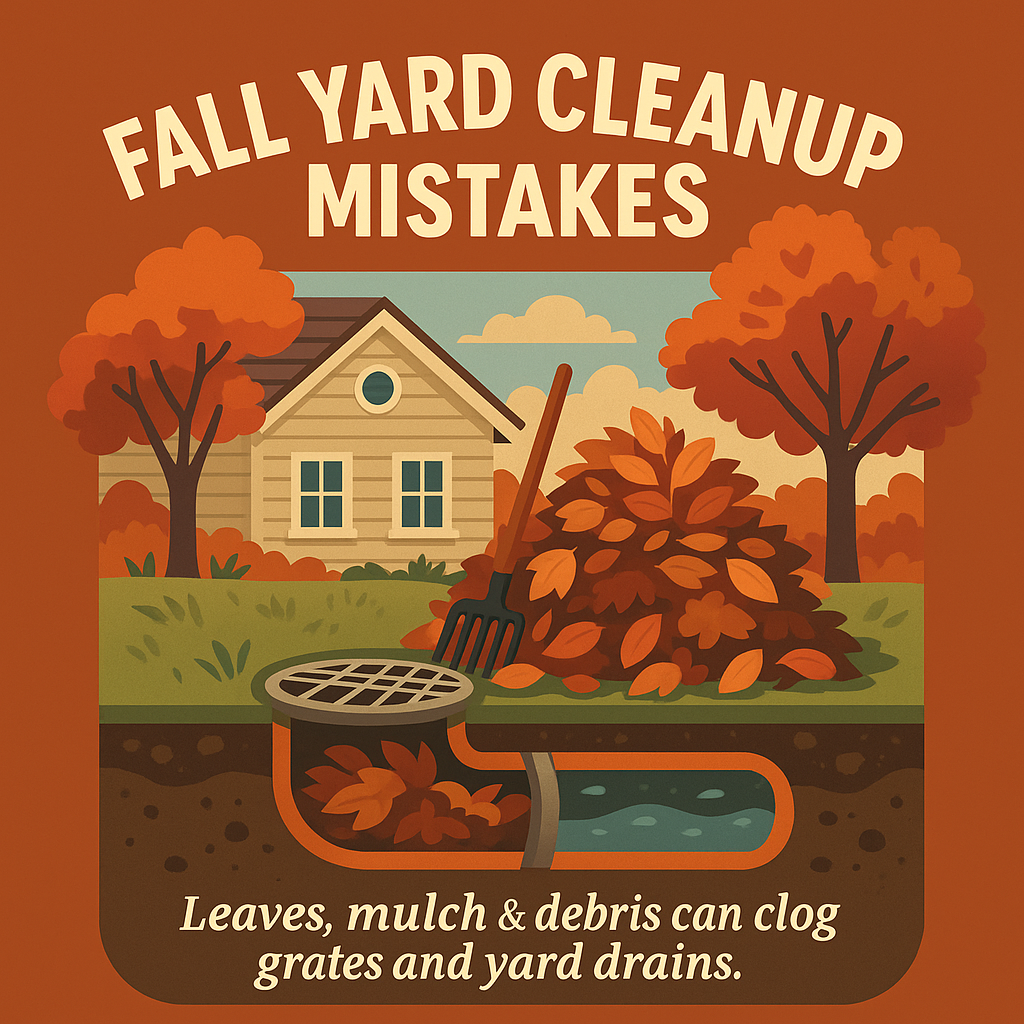
As autumn settles over Fort Wayne, homeowners grab their rakes, blowers, and mulch bags for the annual ritual of fall yard cleanup. But while a tidy yard looks great, the wrong cleanup habits can quietly sabotage your sewer system. From blocked yard drains to mulch buildup over cleanouts, small landscaping missteps can trigger big plumbing emergencies.
In this guide, we’ll walk you through the most common fall yard cleanup mistakes AAA Sewer Service sees in Fort Wayne — and how to avoid turning your weekend chores into costly repairs.
1. Blowing Leaves Toward the Street or Sidewalk Drains
Those crisp leaves look harmless — but once they’re swept toward storm drains or curb grates, they become dense, soggy clogs that trap water and block flow. When autumn rains hit, water can back up across your driveway or into your basement window wells.
Better Practice:
- Rake and bag leaves, don’t blow them toward drainage paths
- Use compost bins or city-approved leaf disposal bags
- Keep storm grates near your home clear of leaves weekly
2. Covering Cleanouts with Mulch or Decorative Stone
It’s tempting to beautify that bare patch of ground with mulch or rock — but if your yard’s sewer cleanout lid is under there, you’ve just buried your only quick-access point for emergencies.
Why It Matters:
- In backups, technicians lose time locating and clearing hidden cleanouts
- Mulch can enter open cleanout caps and fall into the lateral
Fix:
- Identify your cleanout cap and keep it uncovered
- Place a decorative garden marker or paver nearby as a visible reminder
3. Letting Lawn Waste Pile Near Yard Drains or Grates
Grass clippings, bagged leaves, or even trimmed branches stored “temporarily” near yard drains often get knocked over or rained on — turning into sludge that blocks inlets and traps debris.
Results:
- Drain inlets overflow during storms
- Water pools around foundations
- Yard flooding increases pipe strain
Tip:
- Store yard waste at least 6–10 feet from any visible grate or drain
- Cover with tarps if storms are expected
4. Installing Raised Garden Beds Without Checking Drainage Paths
Fall is a great time to build raised beds — but placing them in natural water flow paths or near cleanouts causes problems down the road.
Common Mistakes:
- Blocking natural slope that drains water away
- Covering pop-up emitter caps
- Adding moisture-heavy soil over lateral paths
Smart Garden Planning:
- Observe where water flows after rainfall before installing beds
- Keep at least 3 feet clear around any surface plumbing access
5. Overwatering Newly Seeded or Sodded Lawns
Early fall is prime season for overseeding, but overwatering your lawn while soil is compacted or ungraded can push water into sewer lines or attract root growth toward lateral moisture zones.
Consequences:
- Compacted soil sheds water toward your foundation
- Tree roots invade moisture-rich lateral zones
Best Practice:
- Water in short, early-morning cycles
- Loosen compacted topsoil before seeding
- Avoid pooling water over buried pipes
6. Forgetting to Inspect Your Gutter Downspout Setup
Fall yard cleanup should include a check on where all your roof runoff is going. Downspouts that drop water too close to your foundation can add hundreds of gallons of flow right over your sewer lateral.
Red Flags:
- Downspouts with no extension
- Elbows facing toward the house
- Puddles near exterior walls after rain
Easy Fixes:
- Install extenders 4–6 feet away from the house
- Add rock swales or splash blocks to guide water
Final Thought: A Cleaner Yard Shouldn’t Mean a Clogged Sewer
It only takes one storm — mixed with a few overlooked yard mistakes — to push your system beyond its limit. With a little planning, awareness, and weekly cleanup, your fall yardwork can protect your home instead of threatening it.
Want help locating cleanouts or inspecting your outdoor drainage before fall weather hits hard?
📞Call AAA Sewer Service at (260) 456-6930 or 🌐 visit www.aaasewerservice.com for a fall outdoor system checkup.