
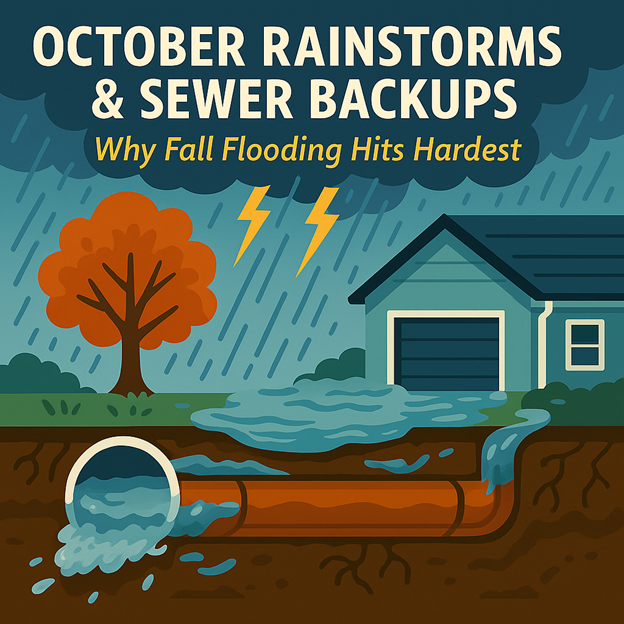
When October sweeps into Fort Wayne, the skies often bring a mix of crisp fall days and heavy rainstorms. What most homeowners don’t realize is that this exact weather shift creates the perfect storm for sewer backups.
Unlike summer downpours, October rains come after weeks of falling leaves, cooling soil, and overloaded storm systems — making your sewer line more vulnerable than ever.
In this expanded guide, AAA Sewer Service explains why fall flooding hits hardest in October, what it means for your home, and how to stay protected.
1. Falling Leaves = Natural Sewer Blockers
When trees shed their leaves, many end up clogging storm drains, gutters, and even curbside grates. Once rainstorms arrive:
- Leaves mat together, forming dense barriers that block water flow.
- Stormwater has nowhere to go, forcing extra pressure into underground sewer lines.
- Street flooding pushes debris into residential laterals, leading to slow drains and backups.
Tip: Keep curb grates clear at least once a week in October — even if they aren’t in front of your home. Blocked street drains can back up into entire neighborhoods.
2. October’s Soil Shift Worsens Pipe Stress
By October, Fort Wayne’s soil has cooled, hardened, and become more compact. When sudden rains arrive:
- Soil expansion and contraction puts pressure on buried pipes.
- Cracks widen, allowing roots and water infiltration.
- Old clay and cast-iron pipes in mid-century homes are especially at risk.
This combination creates silent fractures that may not cause a problem today, but can collapse under November’s early frost.
3. Overloaded Combined Sewer Systems
Many Fort Wayne neighborhoods rely on combined sewer/stormwater systems. That means:
- Every October storm pushes both runoff and household wastewater into the same pipes.
- When storm intensity spikes, backpressure can force sewage back into basements.
- Without a backwater valve, even minor flooding can lead to raw sewage entering floor drains.
Local Note: Older districts like West Central, Southwood Park, and North Anthony are more vulnerable due to aging infrastructure.
4. Sump Pumps Face Hidden October Risks
Most homeowners associate sump pump activity with spring — but October rain is just as challenging:
- Leaf debris can clog discharge lines, preventing water from leaving the basin.
- Long, steady rainfall forces pumps to run continuously, leading to burnout.
- If power outages occur during storms, basements without backup batteries face near-instant flooding.
5. Holiday Prep + Rain = Drain Overload
By October, families are hosting football parties, early Halloween events, and more indoor gatherings. This adds stress to your sewer line at the exact time rain is overwhelming the system:
- More cooking grease and food scraps head down the drain.
- Guests use more bathrooms, showers, and laundry.
- Add a rainstorm on top of this — and your sewer line may not keep up.
What Fort Wayne Homeowners Can Do
Stay ahead of October sewer disasters with these proactive steps:
✅ Schedule a sewer camera inspection — detect early cracks, root intrusion, or buildup before storms hit.
✅ Install a backwater valve — a must-have for basement bathrooms or homes near combined sewers.
✅ Test your sump pump — confirm the float, check valve, and backup battery are working.
✅ Clear gutters & yard drains — don’t let leaves and mulch block vital pathways.
✅ Avoid grease dumping — wipe pans with paper towels and trash them instead of rinsing.
Final Thought: October is the Flood Trigger Month
By the time you notice water rising in your basement, the damage is already done. October rainstorms are unique — they combine leaf buildup, soil stress, sump pump strain, and overloaded sewer mains. That’s why backups peak this month.
With preparation and a little help from AAA Sewer Service, you can enjoy the beauty of autumn without worrying about sewer disasters.
📞 Call AAA Sewer Service at (260) 456-6930
🌐 Visit www.aaasewerservice.com